






How to Build a Simple, Shame‑Free Money Plan When You Feel Behind
You can be successful, smart, and driven—and still feel like a mess with money.
Maybe your income looks great on paper, but your savings feel thin. Maybe debt quietly sits in the background. Maybe you avoid looking at your accounts because it spikes your anxiety.
This doesn’t mean you’re bad with money. It means you’ve never been given a calm, human way to work with it.
This guide walks you through a simple, shame‑free money plan designed for busy, high‑achieving women in their 30s and 40s. No perfection. No rigid budgeting. Just clear steps and emotional breathing room.
Step 1: Pause the comparison spiral
Feeling “behind” usually comes from comparison, not facts. You see friends buying homes, maxing retirement, or talking about investing—and your brain quietly says, “I’m late. I’ve failed.”
Before you touch a spreadsheet, give yourself a mental reset:
Remember: You are not behind on someone else’s timeline. You are on your own path, with your own history, responsibilities, and priorities.
Separate identity from numbers: Your net worth is not your self‑worth. Money is data, not a verdict.
Set a tone: Decide that this process will be curious, not critical. You’re gathering information, not grading yourself.
This mindset shift makes everything that follows feel lighter and more doable.
Step 2: Do a gentle financial check‑in (no judgment allowed)
Instead of a harsh “money audit,” think of this as a status check. You’re simply asking: Where am I today?
Gather, without editing or explaining:
Income: Your take‑home pay each month (after taxes and benefits).
Fixed essentials: Rent or mortgage, utilities, groceries, insurance, transportation, childcare, minimum debt payments.
Flexible spending: Eating out, shopping, beauty, travel, subscriptions, convenience purchases.
Savings and investments: Checking, savings, retirement accounts, brokerage, HSA.
Debt: Credit cards, student loans, personal loans, car loans, buy‑now‑pay‑later.
If this feels overwhelming, break it into 20‑minute sessions over a few days. You don’t have to do it all at once.
As you gather the numbers, notice any shame stories that pop up: “I should know this,” “I’m so irresponsible,” “It’s too late.” Label them as stories, not facts, and come back to the data.
Step 3: Define what “enough” looks like for you right now
Traditional financial advice often jumps straight to “maximize” and “optimize.” When you already feel behind, that can feel impossible.
Instead, start with “enough.” Ask yourself:
Safety: What would make me feel more stable in the next 6–12 months? (Examples: a one‑month emergency cushion, paying off one credit card, not overdrafting.)
Relief: What money stress do I want off my plate first? (Examples: a specific debt, always cutting it close before payday, not knowing where my money goes.)
Joy: What do I want money to make possible in the next 1–3 years? (Examples: a trip, a career pivot fund, fertility support, a home down payment.)
Pick one safety goal and one joy goal to focus on. This keeps your plan realistic and emotionally motivating.
Step 4: Create a simple, three‑bucket money plan
Instead of a complicated budget, use three clear buckets: Must‑Have, Future‑You, and Enjoy. The goal is direction, not perfection.
Bucket 1: Must‑Have
These are your non‑negotiable essentials: housing, utilities, groceries, transportation, childcare, minimum debt payments, basic insurance.
From your check‑in, total these up. Ask: Is my Must‑Have number less than my monthly take‑home pay? If not, that’s your first area to adjust—renegotiating bills, reducing fixed costs where possible, or exploring income increases over time.Bucket 2: Future‑You
This is anything that supports your future stability and freedom: emergency savings, retirement contributions, extra debt payments, sinking funds (for travel, car repairs, moving, etc.).
Start with a simple target: 10–20% of take‑home pay going to Future‑You. If that feels impossible, start with 3–5% and build up. Progress matters more than percentages.Bucket 3: Enjoy
This is everything else that makes your current life feel like your life: dinners out, beauty, shopping, hobbies, gifts, travel upgrades, convenience spending.
Instead of cutting this to zero, give it a clear container. Decide how much you can spend here without sabotaging Future‑You. That might be a weekly amount or a monthly number you track loosely.
Your simple money plan is just this: decide your Must‑Have, Future‑You, and Enjoy amounts, and aim to stay roughly within them each month.
Step 5: Build a realistic savings and debt plan (without burnout)
You don’t have to choose between “live now” and “be responsible.” You can do both, slowly and sustainably.
Use your Future‑You bucket to create a basic order of operations:
1. Small starter emergency fund: Aim for $500–$1,000 in a separate savings account. This is not your forever goal; it’s a buffer between you and the next surprise expense.
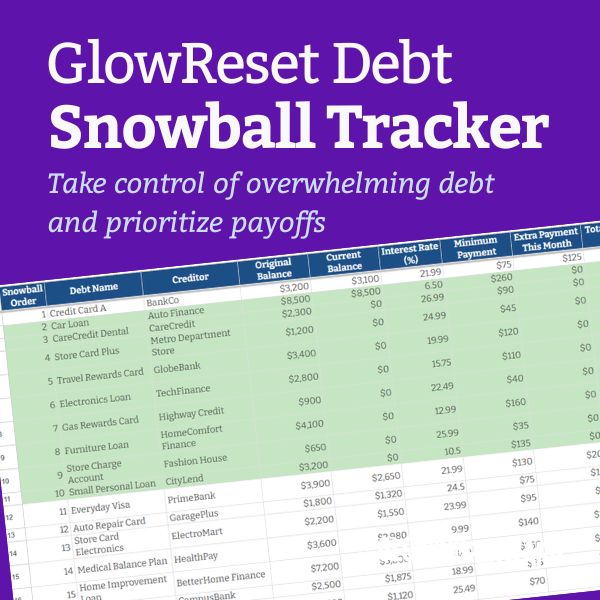
2. High‑interest debt focus: List your debts and interest rates. Choose one focus debt (usually the highest interest or the one that stresses you out the most). Pay minimums on everything else and send any extra Future‑You money to that one balance.
3. Retirement baseline: If your employer offers a match, try to contribute at least enough to get the full match. That’s free money for Future‑You.
4. Grow your cushion: Once your first focus debt is gone or more manageable, grow your emergency fund toward 1–3 months of expenses, depending on your job stability and comfort level.
To avoid burnout, keep your plan flexible. If you have a heavy month (travel, family needs, unexpected costs), it’s okay to pause extra payments and restart next month. Consistency over time matters more than any single month.
Step 6: Make your plan as automatic as possible
Busy professionals don’t need more to‑dos. They need fewer decisions.
Once you’ve chosen your buckets and goals, automate what you can:
Automatic transfers: Set up automatic transfers on payday to your savings, retirement, and any specific goal accounts.
Automatic bill pay: For fixed bills, use auto‑pay where it feels safe and comfortable.
Separate accounts: Consider a separate “Enjoy” account. Transfer your monthly or weekly Enjoy amount there and use that card for non‑essentials. When it’s gone, you’re done—no spreadsheets required.
Automation is not about control; it’s about protecting your future self from decision fatigue and emotional spending spirals.
Step 7: Add emotional check‑ins to your money routine
A shame‑free money plan includes your feelings, not just your numbers.
Once a week or once a month, do a 20‑minute money check‑in:
Look at your accounts and note what changed.
Ask, “What am I proud of this month?” even if it’s small.
Notice where money felt stressful or out of control.
Choose one tiny adjustment for next month.
During these check‑ins, name your emotions: anxious, relieved, numb, hopeful, annoyed. There’s nothing wrong with any of them. They’re signals, not verdicts.
Over time, this builds a calmer emotional relationship with money. You stop avoiding and start relating.
Step 8: Redefine what it means to be “good with money”
Being “good with money” is not about never making mistakes, always maxing out accounts, or following every rule perfectly.
For high‑achieving women, a healthier definition might be:
I know roughly what’s coming in and going out.
I have a simple plan that supports both present‑me and future‑me.
I can look at my accounts without spiraling.
When I fall off track, I adjust instead of abandoning the plan.
You don’t need to become a different person to feel financially grounded. You just need a system that respects your reality, your emotions, and your goals.
Your money story is still being written. Feeling behind today doesn’t say anything about what you’re capable of building next.
Start with one step: a gentle check‑in, a small automatic transfer, or choosing your three buckets. Let it be imperfect. Let it be enough for today.



