







Money Clarity: A Calm, Realistic Reset for Your Finances
If you’re successful on paper but feel behind with money, you’re not alone. Many women quietly carry this mix of pride and panic: a solid career, a full life, and a bank account that doesn’t reflect how hard they work.
This isn’t about fixing you. Nothing is broken. This is about creating clarity so your money finally supports the life you’re already building.
Step 1: Pause the shame, name the facts
Before any spreadsheet or app, you need one thing: a clear, judgment-free picture of where you are today.
Set a 30-minute timer. Your only job is to gather, not analyze.
- Log in to every financial account: checking, savings, credit cards, loans, retirement, investment apps.
- Write down balances: what you own (cash, investments) and what you owe (cards, loans, lines of credit).
- Note your monthly income: after tax, what actually lands in your account.
Keep it neutral. Instead of “This is a mess,” try “This is my starting point.” Facts are not a verdict. They’re just coordinates on a map.
Step 2: Separate survival, stability, and expansion
Overwhelm often comes from treating every expense as equally urgent. They’re not. Sort your money into three simple layers.
- Survival: housing, utilities, groceries, transportation, minimum debt payments, basic healthcare.
- Stability: savings, extra debt payments, insurance, small buffer for irregular expenses.
- Expansion: travel, upgrades, dining out, shopping, courses, beauty, gifts, convenience spending.
Look at your last 1–2 months of transactions and roughly tag each expense into one of these three layers. No need for perfection. You’re looking for patterns, not precision.
This simple filter shows you where your money is actually going versus where you want it to go.
Step 3: Create a “good enough” spending plan
You don’t need a color-coded budget to move forward. You need a realistic, breathable plan that fits your actual life.
Use your monthly take-home income and assign it in this order:
- 1. Cover survival: Make sure your essentials are fully funded first. If they’re not, that’s data, not failure. It means your next step is reducing fixed costs or increasing income, not squeezing lattes.
- 2. Add stability: Aim for at least a small monthly transfer to savings (even $25–$50) and a bit extra to your highest-interest debt if you have any.
- 3. Allow expansion: Decide on a realistic amount you can spend on non-essentials without guilt. This is your “I’m allowed to enjoy my life” money.
Write your plan in simple categories, not 20 line items. For example: Housing, Essentials, Debt, Savings, Fun, Other. You can refine later. Right now, you’re building momentum.
Step 4: Choose one money priority for the next 90 days
Trying to do everything at once is the fastest way to do nothing. For the next three months, pick one clear focus.
- Build a starter emergency fund (for example, $500–$1,500).
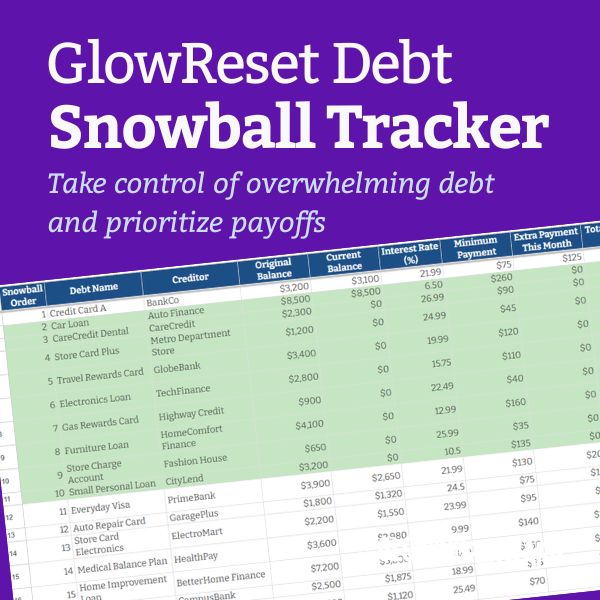
- Pay down one specific debt (a single card or loan).
- Get current on bills if you’re behind.
- Automate retirement contributions to at least get the employer match.
Make it specific and measurable: “I will save $900 in 90 days” or “I will pay off Card A by the end of the quarter.”
Then ask: What needs to be true monthly and weekly for this to happen? That might look like:
- Setting up an automatic transfer the day after payday.
- Pausing one subscription and one convenience habit for 90 days.
- Adding one small income boost: a side project, overtime, or selling a few unused items.
Short, focused sprints are easier on your nervous system than vague, endless goals.
Step 5: Make your money visible, not avoidable
A lot of financial stress comes from not looking. The unknown feels bigger than it is. You can reduce anxiety by making money check-ins small and regular.
Try this rhythm:
- Daily (2–3 minutes): Open your main bank app. Just look at the balance and recent transactions. No judgment, no decisions required.
- Weekly (10–15 minutes): On the same day each week, review spending by category, pay any upcoming bills, and adjust if needed.
- Monthly (20–30 minutes): Check your progress on your 90-day priority and update your balances (cash, debt, retirement).
Put these check-ins on your calendar like any other meeting. Pair them with something that feels grounding: a candle, music, or your favorite drink. The goal is to teach your brain that money time is safe, not scary.
Step 6: Simplify your accounts and decisions
Complexity drains energy. If you’re juggling too many cards, accounts, and due dates, your brain is doing unnecessary work.
- Consolidate where possible: If you have multiple small accounts or cards, consider closing unused ones over time or focusing your efforts on one primary checking and one primary savings account.
- Automate the basics: Set up automatic payments for minimum debt payments and essential bills so you’re not relying on memory.
- Create one “overflow” savings account: Label it clearly (Emergency Fund, Safety Net, or Calm Fund) so you know its purpose.
Every simplified decision path gives you back mental space for the rest of your life.
Step 7: Align your money with what actually matters to you
Feeling behind often comes from comparing your spending to other people’s priorities. The question is not “Am I doing what I’m supposed to do?” but “Does my money reflect what I care about?”
Ask yourself:
- What do I want money to make easier in my life right now?
- What do I want to feel more of: security, freedom, flexibility, generosity, rest?
- Which expenses genuinely light me up, and which just fill space?
Look back at your survival, stability, and expansion layers. Where can you gently shift money away from autopilot spending and toward what you actually value?
For example:
- Reducing random online shopping to fund a weekend away with friends.
- Cutting one subscription to increase your emergency fund transfer.
- Spending less on convenience food to pay off a lingering card balance faster.
Small, values-based shifts compound over time. You don’t need a total lifestyle overhaul to feel a difference.
Step 8: Build a calm, long-term view
Once your day-to-day feels more manageable, you can zoom out. Long-term planning doesn’t have to be dramatic. It can be a series of gentle questions:
- Am I at least capturing my employer’s retirement match?
- Do I know roughly how much I’m saving for the future each month?
- Are there big expenses coming in the next 1–3 years (moves, kids, career changes, caregiving) that I can start preparing for?
If the answers are “not yet,” that’s simply your next chapter, not a failure. You can start by increasing retirement contributions by 1–2% or opening a separate savings bucket for an upcoming life change.
Step 9: Redefine what “being behind” means
Feeling behind is usually about comparison, not reality. You don’t see other people’s debt, family support, or financial stress. You only see the highlight reel.
Instead of asking, “Am I where I should be?” try:
- “Am I more aware of my money than I was 3 months ago?”
- “Have I taken one concrete step toward stability this month?”
- “Is my money slowly becoming more aligned with my values?”
Progress is not linear. Some months will feel smooth; others will feel tight. What matters is that you have a simple system and you keep returning to it.
You’re not late. You’re right on time to build the next version of your financial life—one that feels calmer, clearer, and designed for you.



