







Money Clarity: A Calm Plan For Getting Back On Track
You can be smart, accomplished, and still feel completely behind with money.
Maybe your income looks great on paper, but your savings don’t match. Maybe debt feels like a quiet weight you carry around. Or you’re just tired of feeling like you “should” be further ahead by now.
This isn’t a character flaw. It’s a systems problem, an emotional load, and a clarity gap. All solvable.
This guide walks you through a calm, practical way to get clear on your money and move forward without shame, panic, or perfectionism.
Step 1: Pause the spiral and name what’s true
When you feel behind, your brain jumps to extremes: “I’m terrible with money,” “I’ll never catch up,” “It’s too late.” Those thoughts drain energy you actually need for change.
Instead, try naming what’s true in neutral language:
“I make: approximately $X per month after taxes.”
“I owe: about $X in debt.”
“I have: about $X in savings/investments.”
“I spend: roughly $X per month.”
No judgment. No story. Just numbers. If you don’t know the numbers yet, that’s your first data point: “I don’t have a clear view of my money right now.” That’s not failure; it’s a starting line.
Step 2: Do a 60-minute money scan
You don’t need a full spreadsheet overhaul today. Start with a 60-minute scan to see the landscape.
Gather logins: bank accounts, credit cards, loans, retirement accounts, investment apps.
Write down balances: cash, savings, investments, each debt and its interest rate.
Look at the last 30 days of spending: just note the big categories: housing, food, transportation, debt payments, subscriptions, shopping, travel, childcare, wellness, etc.
Keep it simple. Your goal is not to judge your past choices. Your goal is to see where your money actually lives and where it tends to flow.
If you feel overwhelmed, set a 20-minute timer, take a break, and come back. You’re allowed to do this in small pieces.
Step 3: Define what “on track” means for you
Feeling behind often comes from comparing yourself to vague standards: what friends are doing, what social media says, what you thought your life would look like by now.
Instead, define your own version of “on track.” Try these prompts:
Short term (next 12 months): What would make money feel calmer? Examples: a 3-month emergency fund, paying off one credit card, no longer worrying about rent, automating retirement contributions.
Medium term (3–5 years): What are you building toward? Examples: a home down payment, a career pivot cushion, paying off student loans, funding fertility or family plans, extended travel.
Long term (10+ years): How do you want money to support your future self? Examples: work optional by a certain age, flexible schedule, ability to support causes or family, location freedom.
Pick one priority in each time frame. You don’t need a perfect 20-year plan. You just need a direction.
Step 4: Create a simple, honest spending plan
Instead of a restrictive budget, think of a spending plan that reflects your real life and your actual values.
Start with your monthly take-home income. Then list:
Essentials: housing, utilities, groceries, transportation, insurance, minimum debt payments, childcare.
Financial priorities: emergency fund, extra debt payments, retirement, investments, sinking funds for upcoming expenses (travel, car repairs, medical, business costs).
Joy and lifestyle: dining out, shopping, beauty, wellness, hobbies, gifts, experiences.
Assign rough amounts to each category. If the numbers don’t fit, don’t blame yourself. Adjust the plan, not your worth. Ask:
Can any essentials be negotiated or reduced over time?
Can I slow down one goal to make room for another?
Where can I spend more intentionally without feeling deprived?
Your plan should feel slightly stretchy, not punishing. If it feels impossible, it won’t last. Aim for something you could realistically follow for the next three months.
Step 5: Build a 3-layer safety net
Feeling behind is often really about feeling unsafe. A simple safety net can calm your nervous system and your finances.
Layer 1: Micro-buffer. Aim for $250–$1,000 in a separate savings account as quickly as your situation allows. This is for small surprises so they don’t go straight to a credit card.
Layer 2: Core emergency fund. Work toward 3 months of essential expenses, then 6. This can take years. That’s normal. Progress is what matters.
Layer 3: Future-you fund. Retirement accounts and long-term investments. Even small, consistent contributions can compound into something meaningful.
You don’t have to fully fund each layer before starting the next. You might split your efforts, like 60% toward debt, 20% toward your buffer, 20% toward retirement. The exact mix depends on your interest rates, risk tolerance, and timeline.
Step 6: Make debt a project, not a verdict
Debt can carry a lot of emotion: shame, regret, frustration. But debt is just a tool you used at a certain point in time, often to solve a real need: education, survival, caregiving, business, or simply getting through a hard season.
Turn it into a project with a clear plan:
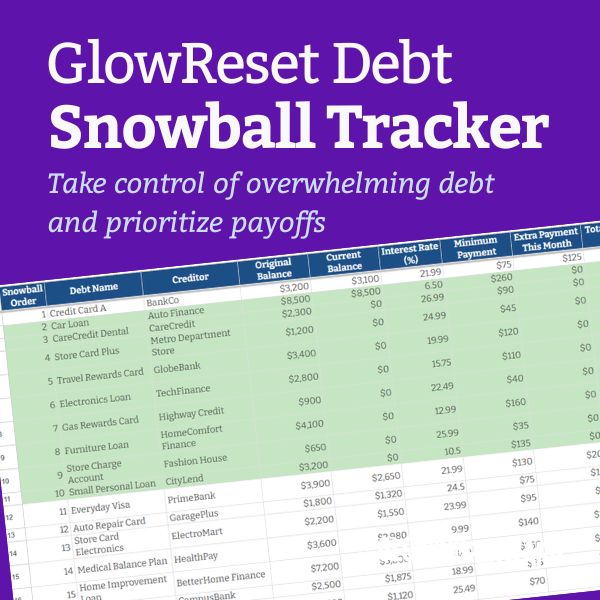
List all debts: balance, interest rate, minimum payment.
Choose a strategy: highest interest first (saves money) or smallest balance first (builds momentum).
Decide your extra amount: even $50–$100 per month can make a difference over time.
Automate what you can. Track your progress monthly, not daily. Celebrate each account you pay off or reduce. Progress is progress, even if it’s slower than you’d like.
Step 7: Automate to protect your energy
Willpower is unreliable. Systems are kinder.
Once your basic plan is sketched out, automate as much as possible:
Automatic transfers to savings right after payday.
Automatic debt payments at or above the minimums.
Automatic retirement contributions through your employer or an individual account.
Automation doesn’t mean you ignore your money. It means the default path is aligned with your goals, so you’re not constantly starting from zero each month.
Step 8: Add a monthly money check-in
Instead of avoiding your accounts until something feels urgent, schedule a 30–45 minute monthly check-in.
Look at your balances and recent transactions.
Adjust any categories that didn’t match reality.
Note one win (no matter how small) and one tweak for next month.
Make it as pleasant as possible: favorite drink, music, a candle, or a cozy corner. You’re not punishing yourself; you’re partnering with your money.
Step 9: Release the timeline pressure
You may have a voice in your head saying, “By this age, I should already have X saved, Y paid off, Z invested.”
Those timelines often ignore the full story: career changes, caregiving, health issues, moves, divorce, supporting family, systemic barriers, or simply not having had access to financial education earlier.
Instead of “I’m behind,” try:
“Given everything I’ve lived through, I’m starting from here.”
“I can’t change the past, but I can shape the next chapter.”
“I’m allowed to build wealth at my own pace.”
Your money story is not over. You’re in the middle, not at the end.
Step 10: Choose one next step for this week
Clarity without action just becomes more mental clutter. Choose one small step you can complete in 20–60 minutes this week:
List all your accounts and balances.
Cancel 2–3 subscriptions you don’t use.
Open a separate savings account for your buffer.
Increase a debt payment or retirement contribution by a small, doable amount.
Schedule your first monthly money check-in.
That single step is how you move from “I’m behind” to “I’m in motion.”
You are not late. You are right on time to take the next aligned step for you. Your money can become a calmer, clearer part of your life—one decision, one month, one small shift at a time.



