







Money Clarity: A Calm, Realistic Reset for Your Finances
You can be smart, accomplished, and still feel completely tangled when it comes to money.
Maybe your income looks good on paper, but your savings don’t reflect it. Maybe you’re carrying quiet debt no one knows about. Maybe you’re just tired of feeling like you “should be further along by now.”
This isn’t a character flaw. It’s a clarity problem, an emotional load problem, and often a time problem. Let’s reset that, calmly and practically.
Step 1: Separate Your Self-Worth From Your Net Worth
Before any spreadsheet, the mindset reset comes first.
- Your money story is data, not a verdict. Your balance, debt, or savings are simply a snapshot of choices, circumstances, and seasons of life.
- Success is not one-dimensional. You may be thriving in your career, relationships, or health while still figuring out money. That’s allowed.
- Shame blocks action. When you feel embarrassed, you avoid looking at the numbers. When you avoid the numbers, you stay stuck. We’re not doing shame here—only information and next steps.
As you read, notice any harsh self-talk that pops up. Gently replace it with: “I’m learning new skills. I’m allowed to start from here.”
Step 2: Get a Clear, Simple Snapshot of Your Money
Clarity calms your nervous system. You don’t need a complex system; you need a clean picture.
Open a blank page or note and list four sections:
- 1. Income (monthly)
Salary, bonuses (averaged), side income, rental income, anything consistent enough to count. - 2. Fixed Essentials
Rent or mortgage, utilities, groceries, transportation, insurance, childcare, minimum debt payments. - 3. Lifestyle & Optional
Dining out, shopping, subscriptions, travel, beauty, wellness, convenience services. - 4. Debt & Savings
All balances: credit cards, student loans, personal loans, car loans, retirement accounts, savings, investments.
Don’t worry about perfection. Approximate numbers are fine to start. The goal is to see the whole picture on one page.
If this feels emotionally heavy, set a timer for 20 minutes. Do what you can, then stop. You can come back tomorrow. Progress over perfection.
Step 3: Define What “Financially Okay” Actually Means for You
Many women feel behind because they’re chasing a vague idea of “I should have more by now.” Vague goals create constant anxiety.
Let’s define your version of “financially okay” for the next 12–24 months, not forever.
- Safety: 1–3 months of essential expenses in savings.
- Stability: All bills paid on time, no panic when something auto-drafts.
- Direction: A simple plan for debt and savings that you actually understand.
Write one calm, clear sentence: “For the next year, financially okay means: ______.”
Examples:
- “Having two months of expenses saved and paying all cards on time.”
- “Paying off my highest-interest card and starting a small emergency fund.”
- “Knowing exactly where my money goes and saving a set amount each month.”
This becomes your filter. If a money decision doesn’t move you closer to that sentence, it’s easier to say no—or “not right now.”
Step 4: Create a Gentle, Realistic Spending Plan
Instead of a strict budget, think of a spending plan that respects your reality: your income, your responsibilities, and your energy.
Use three simple buckets:
- Essentials (non-negotiable to live and work)
- Future You (savings, investing, debt beyond the minimum)
- Enjoyment (everything that makes life feel like life)
Look at your income and assign rough percentages that feel doable for the next three months, not forever. For example:
- 60% Essentials
- 20% Future You
- 20% Enjoyment
If you’re in a high-cost area or in a heavy-debt season, your numbers may look more like 70–75% Essentials, 15–20% Future You, 5–10% Enjoyment. That’s okay. This is about honesty, not aesthetics.
Then, choose one or two small adjustments that free up cash for Future You without draining your joy. For example:
- Pause one or two subscriptions you barely use.
- Cap delivery or rideshare to a set amount per month.
- Swap two weekly takeout meals for easy at-home options.
Small, consistent shifts beat dramatic, unsustainable overhauls.
Step 5: Give Every Dollar a Simple Job
Once a month (or each payday), decide in advance where your money is going. This doesn’t need to be complicated.
- Step 1: Cover Essentials first.
- Step 2: Decide your Future You amount (savings, investing, extra debt payment).
- Step 3: Whatever is left is your Enjoyment money—guilt-free, as long as Steps 1 and 2 are covered.
If your income is variable, work with a “baseline” number (the amount you can reasonably count on). Build your Essentials around that, then direct any extra toward savings, debt, or specific goals.
Consider opening separate accounts for:
- Emergency fund
- Short-term goals (travel, moving, business investment)
- Everyday spending
Seeing your money separated by purpose can reduce the urge to overspend and make decisions feel clearer.
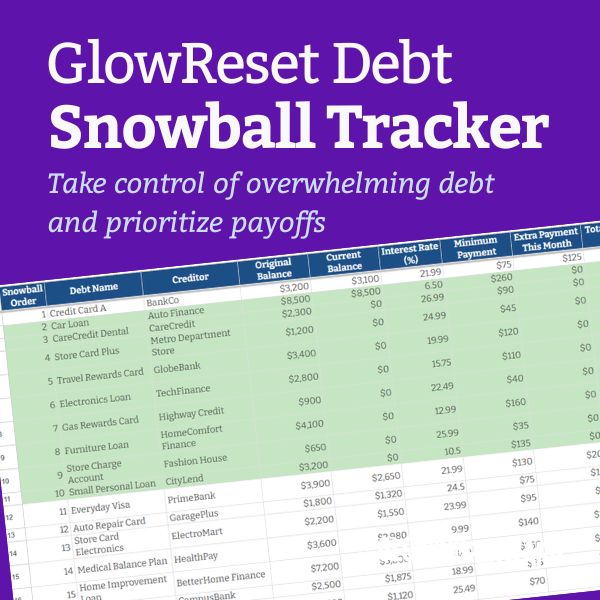
Step 6: Tidy Up Debt Without Obsessing Over It
Debt is emotionally loud. It can make you feel behind, even when you’re doing many things right. Instead of spiraling, get specific.
List each debt with:
- Balance
- Interest rate
- Minimum payment
Then choose one focus strategy:
- Highest interest first (mathematically efficient)
- Smallest balance first (emotionally motivating)
Pay the minimum on everything, then direct any extra to your focus debt. When that one is done, roll that payment into the next debt. This is how momentum builds quietly in the background.
And if you can only pay minimums right now, that’s still movement. You’re honoring your current capacity while you stabilize other areas.
Step 7: Put Your Money on Autopilot Where You Can
Willpower is limited. Systems are kinder.
- Automate minimum debt payments so you never miss due dates.
- Automate a small transfer to savings every payday, even if it’s modest. You can always increase it later.
- Set calendar reminders once a month for a 20–30 minute “money check-in.”
Your money check-in can be simple:
- Glance at your balances.
- Notice any subscriptions or patterns that no longer feel aligned.
- Decide one tiny adjustment for the next month.
Consistency, not intensity, is what changes your financial reality over time.
Step 8: Redefine What “Being Good With Money” Looks Like
Being good with money doesn’t mean never ordering takeout, never traveling, or obsessing over every receipt.
It looks more like:
- Knowing your numbers without dread.
- Spending in ways that match your actual values, not other people’s expectations.
- Making decisions with a calm “yes” or “no,” instead of a panicked “I’ll deal with it later.”
- Allowing yourself to enjoy your money while still caring for Future You.
You don’t need to fix everything this month. You only need to take the next clear step.
If you feel behind, remember: you are not starting from zero. You’re starting from experience, insight, and a deep desire to feel grounded with money. That is powerful.
Pick one small action from this list to do in the next 48 hours:
- Write your “financially okay for the next year” sentence.
- List your monthly essentials and see how much they total.
- Open a separate savings account and name it “Safety Fund.”
- Schedule a recurring 30-minute monthly money check-in on your calendar.
Your finances don’t need a dramatic makeover. They need your calm, consistent attention. From there, things start to shift—quietly, steadily, and in your favor.



