







How to Create a Gentle, Real-Life Financial Reset in 30 Days
You can be successful, smart, and driven—and still feel behind with money.
If you’ve been avoiding your accounts, feeling guilty about past choices, or too emotionally exhausted to open another budgeting app, this is for you.
This 30-day gentle money reset is not about restriction, spreadsheets, or overhauling your life overnight. It’s about small, kind actions that help you feel grounded, clear, and back in control.
Use this as a guide, not a rulebook. If 30 days straight feels like too much, stretch it over six weeks. Progress counts, not perfection.
Week 1: Calm the Noise and Get Emotionally Grounded
The first week is about emotional clarity, not cutting expenses. You’re building a calm foundation so money doesn’t feel so heavy.
Day 1: Name what’s really bothering you
Take 10 minutes and write freely:
“I feel behind financially because…”
“I’m most scared about…”
“If money felt easier, my life would look like…”
No fixing. No judging. Just noticing. This is your starting point.
Day 2: Separate your worth from your net worth
Write down three ways you’re successful that have nothing to do with money—career, relationships, health, resilience. You are not your bank balance. Remind yourself of this before you look at any numbers.
Day 3: Create a calm money ritual
Choose a weekly “money check-in” time (15–30 minutes). Light a candle, make tea, play music—whatever makes it feel less clinical and more like self-care. This will be your anchor for the next 30 days.
Day 4: List your money “open tabs”
Write down everything that’s mentally draining you:
“I need to cancel that subscription.”
“I haven’t checked my credit card in weeks.”
“I don’t know how much I actually spend on food.”
This is not a to-do list yet. It’s a brain dump so your mind can rest.
Day 5: Choose your gentle reset goal
Pick one main outcome for the next 30 days. For example:
“I want to feel calm and informed about my money.”
“I want a simple financial plan for the next three months.”
“I want to stop feeling afraid to open my banking app.”
Your goal is emotional and practical. It guides your choices without pressure.
Day 6: Define your “non-restrictive” money approach
Write down what you are not willing to do right now (for example: “no extreme cutting,” “no tracking every penny,” “no shame”). Then write what you are willing to try (for example: “check accounts weekly,” “set one spending limit that feels kind,” “automate one bill”).
Day 7: Rest and reset
No money tasks today. Let your nervous system catch up. You’re allowed to rest while still being responsible.
Week 2: Gently Face the Numbers (Without Spiraling)
This week is about information, not judgment. You’re collecting data so you can make choices that match your real life.
Day 8: Gather your accounts
Make a simple list of where your money lives:
Checking accounts
Savings accounts
Credit cards
Loans (student, auto, personal, etc.)
Retirement or investment accounts
No deep dive yet. Just a list.
Day 9: Check balances with a 5-minute rule
Set a timer for 5–10 minutes. Log in and write down balances for each account. When the timer ends, you stop—even if you’re mid-scroll. This keeps you out of the doom spiral.
Day 10: Map your monthly essentials
List your fixed, non-negotiable costs:
Housing
Utilities and phone
Transportation
Minimum debt payments
Basic groceries
Add them up. This is your “bare-minimum life” number. It’s grounding to know this.
Day 11: Notice your real-life spending patterns
Look at the last 30 days of transactions. Instead of judging, just categorize loosely:
Essentials (rent, bills, groceries)
Support (therapy, childcare, wellness)
Joy (dining out, travel, beauty, hobbies)
Auto-pilot (subscriptions, fees, things you barely notice)
You’re learning how your life actually works—not how it “should” look.
Day 12: Choose one small “auto-pilot” tweak
From the auto-pilot category, pick one thing to change:
Cancel a subscription you forgot about.
Downgrade a service tier.
Set an alert for when a bill is due.
This is a gentle financial reset, not a personality transplant. One change is enough.
Day 13: Create a non-restrictive spending snapshot
Take your monthly income. Subtract your essentials. What’s left is your flexible money. Instead of a strict budget, give this money loose “buckets,” like:
Support (therapy, help, wellness)
Joy (fun, travel, dining out)
Future you (savings, debt above minimums)
Assign rough amounts that feel realistic, not aspirational. You’re designing a simple financial plan that fits your actual life.
Day 14: Celebrate data, not perfection
Pause and acknowledge: you now know your balances, essentials, and patterns. That alone is a huge step in getting back on track financially. Do something small to celebrate—your favorite coffee, a walk, a long bath.
Week 3: Build a Simple, Supportive Money System
Now that you have clarity, you’ll create a system that runs with minimal effort. Think “financial self-care routine,” not “financial boot camp.”
Day 15: Design your weekly money check-in
Decide what you’ll do each week in 15–30 minutes:
Glance at balances
Scan for weird charges
Pay upcoming bills
Move a small amount to savings or debt
Write this down so you’re not starting from scratch every time.
Day 16: Automate one thing
Pick one helpful automation:
Automatic transfer to savings (even $25 per paycheck)
Automatic extra payment to a priority debt
Automatic payment for a bill you always forget
Automation is stress-free money management. It reduces decision fatigue.
Day 17: Create a tiny “calm cushion”
If you don’t already have one, start a small buffer fund. This is not a full emergency fund; it’s a calm cushion. Aim for $100–$500 over time. Move a small amount this week—whatever feels doable without strain.
Day 18: Choose your “one debt” focus (if relevant)
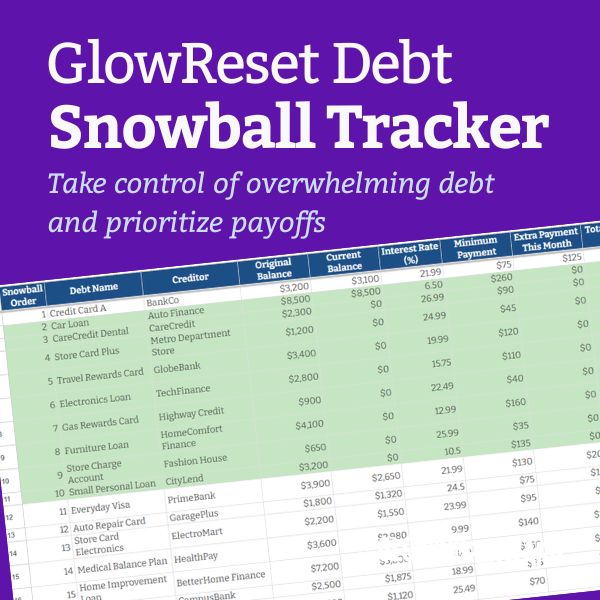
If you have multiple debts, choose one to give a little extra attention to. You’ll still pay minimums on all, but this one gets any extra you feel comfortable sending. Clarity reduces overwhelm.
Day 19: Protect your joy spending
Look at your joy category. Instead of cutting it, define it:
What actually brings you joy?
What feels like mindless spending that doesn’t add much?
Keep the joy that truly lights you up. Gently reduce the rest. This is non-restrictive budgeting in action.
Day 20: Set one boundary that supports your money
Examples:
“I’ll check my accounts once a week, not every day.”
“I’ll pause saying yes to every group trip until I hit X in savings.”
“I’ll give myself 24 hours before big impulse purchases.”
Boundaries protect your energy and your bank account.
Day 21: Review and adjust gently
Look back at the last week. What felt easy? What felt heavy? Adjust your plan to fit you better. A simple financial plan is allowed to evolve.
Week 4: Strengthen Your Money Mindset and Future Vision
This final week is about your relationship with money long-term. You’re moving from “putting out fires” to “building something steady.”
Day 22: Rewrite your money story
Finish these sentences in a way that feels honest but hopeful:
“In the past, my relationship with money has been…”
“Right now, my relationship with money is…”
“Going forward, I want my relationship with money to feel…”
This is money mindset for high achievers: honest, compassionate, and future-focused.
Day 23: Define your next 90 days
Choose 1–3 simple goals for the next three months, such as:
“Build a $500 calm cushion.”
“Pay an extra $50 per month toward one debt.”
“Do my weekly money check-in 10 out of 12 weeks.”
Make them small enough that they feel doable even on a hard week.
Day 24: Identify your money support system
Support can be:
A friend you can talk about money with honestly
A therapist or coach
A financial planner or advisor
Podcasts or books that feel empowering, not shaming
Write down where you’ll turn when you feel overwhelmed instead of shutting down.
Day 25: Create a “hard day” money plan
Decide in advance what you’ll do when you feel stressed or tempted to avoid money:
One 5-minute action (check one balance, move $5 to savings)
One grounding activity (walk, breathwork, journaling)
One phrase you’ll tell yourself (“I can take one small step. I don’t have to fix everything today.”)
This keeps you moving gently forward, even on low-energy days.
Day 26: Revisit your lifestyle priorities
Ask yourself:
What do I want my money to make possible in my life?
What am I no longer willing to spend energy or money on?
Let your spending slowly shift to match your real values, not what you think you “should” care about.
Day 27: Check in with your progress
Look at where you started 27 days ago. Notice any shifts:
Do you feel less afraid to look at your accounts?
Do you understand your numbers more clearly?
Have you made even one small change that supports you?
Progress is emotional as much as it is numerical.
Day 28: Refine your weekly money routine
Update your weekly check-in based on what you’ve learned. Make it as light and simple as possible while still effective. This is your ongoing financial self-care routine.
Day 29: Choose one “future you” move
Pick one step that supports long-term you:
Increase a retirement contribution slightly.
Open a high-yield savings account.
Schedule a consultation with a financial professional.
It doesn’t have to be big. It just has to exist.
Day 30: Close the reset with compassion
Write a short note to yourself about what you’ve learned:
What surprised you?
What feels lighter?
What do you want to keep doing?
Remind yourself: getting back on track financially doesn’t require perfection, punishment, or a totally different personality. It asks for small, consistent, kind actions—exactly what you’ve been practicing.
Your 30-day gentle money reset is not the end. It’s the beginning of a calmer, more confident relationship with your money—and with yourself.



