







Feeling Behind With Money: A Calm, Clear Reset for Your Finances
You can be smart, accomplished, and still feel completely behind with money.
Maybe your income looks good on paper, but your savings don’t match. Maybe you’re carrying quiet debt no one knows about. Or you’re just tired of feeling like money is one more thing you “should have figured out by now.”
This isn’t a character flaw. It’s a signal. And you can respond to that signal calmly, without burning your life down or turning your finances into a second full-time job.
Think of this as a reset: clear, simple steps to move from “I’m behind” to “I’m in motion.”
Step 1: Define What “Enough” Looks Like for You
Feeling behind often comes from chasing a moving target. Social media, friends’ milestones, and vague ideas of “success” make it impossible to feel caught up.
Instead of asking, “Am I doing as well as I should be?” try, “What would ‘enough’ look like for me in this season?”
Start with three numbers:
- Cushion: How much cash would help you breathe easier? For many women, this is 1–3 months of essential expenses.
- Debt direction: Not “all gone tomorrow,” but “moving down, not up.” Even $50–$150 per month beyond minimums is progress.
- Future you: A monthly amount going to retirement or investing. It can be small. The habit matters more than the size at first.
Write these down. You’ve just created your personal definition of “enough for now.” This is your new measuring stick—not someone else’s timeline.
Step 2: Take a Gentle, Honest Money Snapshot
Overwhelm thrives in the unknown. You don’t need a full spreadsheet empire. You just need a snapshot.
Set a 30-minute timer. No perfection, no sorting receipts. Just gather:
- Checking and savings balances
- Credit card balances and interest rates
- Student loans, personal loans, or car loans
- Retirement accounts (401(k), IRA, etc.)
Then answer three questions on paper or in a notes app:
- 1. What’s working? Maybe you always pay on time. Maybe you’re contributing something to retirement. Name it.
- 2. What feels heavy? A specific card, a bill you avoid opening, or the feeling of “I don’t know where my money goes.”
- 3. What needs clarity? For example: “I don’t actually know my interest rates” or “I’m not sure what I’m invested in.”
This snapshot is not a verdict. It’s a starting point. You can’t be “behind” in a race you’re now choosing to redesign.
Step 3: Create a Calm Cash Flow Plan (Not a Punishing Budget)
If the word “budget” makes you tense, reframe it as a cash flow plan: a simple way to tell your money where to go instead of wondering where it went.
Begin with three buckets:
- Must-haves: Housing, utilities, groceries, transportation, minimum debt payments, childcare, basic healthcare.
- Stability moves: Emergency cushion, extra debt payments, retirement or investment contributions.
- Life-giving spending: The things that make your current life feel like yours—therapy, movement, coffee dates, travel, beauty, hobbies.
Look at your last 1–2 months of bank and card activity. Roughly sort spending into these buckets. No need for perfect categories.
Then make one small adjustment in each bucket:
- Must-haves: Can anything be negotiated or simplified? Think: switching plans, canceling unused subscriptions, asking for lower rates.
- Stability moves: Choose a realistic starting number. Even $25–$100 per month to savings or debt is valid.
- Life-giving spending: Protect a portion of this. You’re not fixing your finances by stripping all joy. You’re building something sustainable.
The goal is not to spend as little as possible. The goal is to spend with intention.
Step 4: Tackle Debt Without Letting It Define You
Debt can feel like a secret weight, especially for high-achieving women who are used to being “on top of things.” But debt is a situation, not an identity.
Choose one of these simple approaches:
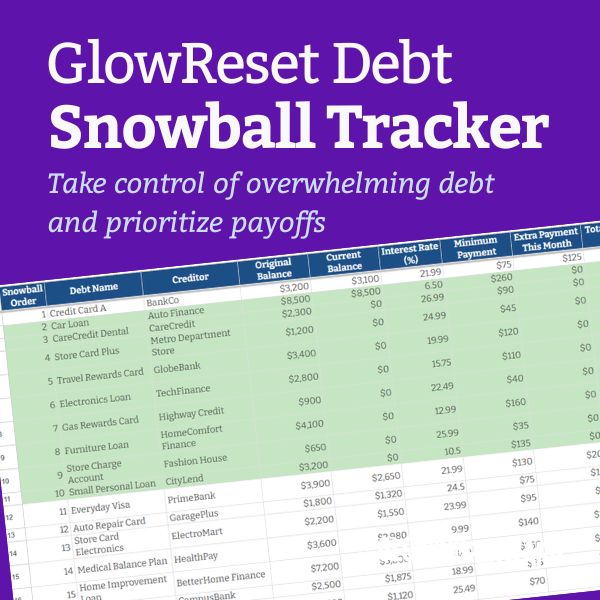
- Snowball: Pay extra on the smallest balance first while paying minimums on the rest. Each payoff gives you a psychological win.
- Avalanche: Pay extra on the highest-interest debt first. This saves the most money over time.
Pick the method that you’re more likely to stick with, not the one that sounds most impressive.
Then decide on your “extra” amount. It might be created by:
- Pausing or reducing one non-essential expense for a few months
- Redirecting a small raise or bonus
- Taking on a short-term side project with a clear end date
Set up automatic payments for your chosen extra amount. Automation removes decision fatigue and quiets the daily mental noise around debt.
Step 5: Start Investing in Future You (Even If It Feels Late)
Many women delay investing because they feel “too behind” to start. Ironically, that delay is what keeps them behind.
If you have access to a workplace retirement plan, start there. If there’s an employer match, aim to contribute at least enough to get the full match—that’s part of your compensation.
If you don’t have a plan at work, explore an IRA or similar account through a reputable brokerage. You don’t need to become a market expert. Look for simple, diversified options like target-date or broad index funds.
Begin with an amount that feels doable monthly, even if it’s small. The habit and consistency matter more than the starting number. You can always increase later as your cash flow improves.
Remind yourself: starting now is powerful. You are not late to your own life.
Step 6: Reduce Money Overwhelm With Simple Systems
Emotional exhaustion around money often comes from decision overload. Systems help you feel held, not restricted.
Consider adding one or two of these:
- Money date: 20–30 minutes once a week to check balances, pay bills, and adjust. Light a candle, play music, make it feel calm.
- Automatic transfers: Schedule transfers to savings, debt, and investing right after payday so you’re not relying on willpower.
- Separate accounts: One account for bills, one for everyday spending. This makes it easier to see what’s truly available.
- Visual progress: A simple tracker for debt payoff or savings—on paper, a note on your phone, or a simple app.
Systems are not about control for control’s sake. They’re about creating fewer moments where you have to think, worry, or second-guess.
Step 7: Rewrite the Story You Tell Yourself About Money
The numbers matter, but the story you attach to them matters just as much.
Notice any recurring thoughts:
- “I should be further along.”
- “I’m bad with money.”
- “It’s too late to fix this.”
These thoughts feel factual, but they’re actually interpretations.
Try gently shifting them:
- From “I should be further along” to “I’m learning how to move forward from where I am today.”
- From “I’m bad with money” to “I’m building new skills with money, step by step.”
- From “It’s too late” to “Now is the earliest moment I can change things—and I’m using it.”
This isn’t forced positivity. It’s choosing language that leaves room for growth instead of shutting it down.
Step 8: Choose One Next Step—Not Ten
When you want your entire financial life to change, it’s tempting to overhaul everything at once. That usually leads to burnout.
Instead, choose one clear next step you can complete in the next 48 hours. For example:
- List all your debts with balances and interest rates.
- Set up a small automatic transfer to savings.
- Increase your retirement contribution by 1%.
- Schedule a weekly 20-minute money date on your calendar.
Once that’s done, choose the next step. Progress is built in layers, not in a single dramatic moment.
You are not behind. You are exactly where you are—and now you’re choosing to move with intention. That choice, repeated in small ways, is what changes everything.



