







How To Feel Financially Secure Even If You Started “Late”
You can be successful on paper and still feel behind with money.
Maybe you earn well, but your savings feel thin. Maybe you helped family, went through a divorce, changed careers, or simply focused on everything and everyone else first.
Feeling behind can be heavy. It can also be the exact signal you need to reset and build a calmer, more secure financial life from here.
This is not about catching up to some imaginary timeline. It is about creating stability and choice for your future self, starting from where you are today.
Step 1: Get honest numbers, without self-criticism
Most financial anxiety comes from not knowing the full picture. Your brain fills in the gaps with worst-case scenarios.
Instead of asking, “How did I let this happen?” ask, “What is true right now?”
Gather three simple snapshots:
- What you own: cash, checking, savings, retirement accounts, investments, home equity, business equity, HSA, etc.
- What you owe: credit cards, student loans, car loans, personal loans, mortgage, taxes owed.
- What flows in and out monthly: average take-home income and average spending.
Write it down in one place. A basic spreadsheet or a notes app is enough.
The goal is clarity, not perfection. You are gathering data, not evidence against yourself.
Step 2: Define what “secure” actually means to you
Feeling behind often comes from comparing yourself to vague standards: “I should have more saved by now.”
Instead, define your own version of secure. Ask yourself:
- How much cash would help me sleep better at night?
- What kind of work flexibility do I want in 5–10 years?
- What lifestyle do I want to protect if something unexpected happens?
Turn those into simple targets:
- Emergency cushion: 3–6 months of essential expenses in cash.
- Short-term goals: travel, moving, career pivot fund, home projects in the next 1–5 years.
- Long-term freedom: retirement, semi-retirement, or work-optional life.
You do not need exact dollar amounts on day one. Start with ranges. You can refine as you go.
Step 3: Stabilize your present before optimizing your future
If things feel chaotic, your first job is to create stability, not to chase the highest investment return.
Focus on three priorities, in this order:
- 1. Stop the financial bleeding
If you are regularly using credit cards to cover basics, look for immediate ways to reduce pressure: negotiate bills, pause non-essential subscriptions, ask about lower interest rates, or explore temporary income boosts like consulting, overtime, or a short-term side project. - 2. Build a small safety buffer
Even $500–$1,000 in a separate savings account can reduce day-to-day anxiety. This is not your forever emergency fund; it is your first layer of calm. - 3. Get current on essentials
Prioritize housing, utilities, food, transportation, and minimum debt payments. These keep your life functioning while you build the next layer of security.
Once your present feels less fragile, it becomes much easier to think long-term.
Step 4: Create a simple, values-based spending plan
Traditional budgets often feel restrictive and unrealistic. Instead, build a plan that reflects what you actually care about.
Start with three categories:
- Must-haves: housing, utilities, food, transportation, insurance, minimum debt payments, childcare.
- Future-you: emergency fund, retirement contributions, extra debt payments, savings for near-term goals.
- Nice-to-haves: dining out, shopping, travel, beauty, convenience services, hobbies.
Look at your last 1–3 months of spending and sort it into these buckets. Then ask:
- Where am I spending out of habit, not intention?
- What would I be excited to keep, even if I cut other things?
- What could I pause or reduce for 6–12 months to give myself more breathing room?
Your goal is not to cut everything fun. Your goal is to free up cash for the things that matter most: stability, flexibility, and future options.
Step 5: Tackle debt with a calm, structured plan
Debt can make you feel behind, even if your income is strong. The key is to move from vague worry to a clear plan.
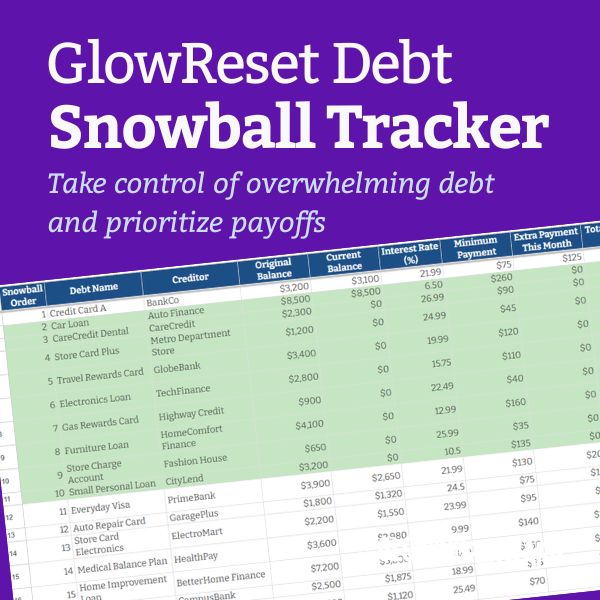
List each debt with its balance, interest rate, and minimum payment. Then choose one of these approaches:
- Debt snowball: Pay extra toward the smallest balance while paying minimums on the rest. Each payoff gives you a quick win and momentum.
- Debt avalanche: Pay extra toward the highest interest rate first. This saves the most money over time.
There is no morally superior method. Choose the one you are most likely to stick with.
If interest rates are high, explore options like 0% balance transfer offers, refinancing, or calling lenders to ask about hardship programs. These are tools, not failures.
Step 6: Start investing, even if it feels “late”
Many women delay investing because it feels complicated or because they think they need a large amount to start. In reality, time in the market matters more than perfection, and starting now is powerful even if you are not in your 20s.
Begin with what is available to you:
- Work retirement plan (401(k), 403(b), etc.): If your employer offers a match, aim to contribute at least enough to get the full match. It is essentially extra compensation.
- IRAs: If you do not have a workplace plan, or you want to add more, consider a traditional or Roth IRA, depending on your income and tax situation.
- Simple investments: Low-cost index funds or target-date funds can give you broad diversification without needing to pick individual stocks.
You do not need to know everything about investing to begin. Start small, automate contributions, and learn as you go.
Step 7: Protect your progress with boundaries and safeguards
Financial security is not just about earning and saving. It is also about protecting what you are building.
Consider:
- Insurance: Health, disability, and life insurance (if others depend on your income) can prevent a setback from becoming a crisis.
- Boundaries with money requests: If you are the go-to helper in your family or friend circle, decide in advance what you can realistically give without harming your own stability.
- Separate accounts: Keeping your emergency fund and long-term savings in separate accounts can make it less tempting to dip into them for everyday spending.
Protecting your financial progress is an act of self-respect, not selfishness.
Step 8: Build a gentle review ritual
Money feels less overwhelming when you check in regularly instead of only when something is wrong.
Try a 30–45 minute weekly or biweekly ritual:
- Look at your accounts and recent transactions.
- Move money to savings or debt according to your plan.
- Note any upcoming expenses so they do not surprise you.
- Celebrate one thing you did well with money that week, no matter how small.
This is about staying in relationship with your money, not obsessing over it.
You are not behind. You are starting from here.
Your path may not look like anyone else’s. That does not make it wrong. It makes it yours.
You can be someone who supported others, survived hard seasons, changed directions, or simply prioritized different things—and still become someone who is financially secure and confident.
The turning point is not a perfect plan. It is the moment you decide to work with the reality of your numbers, your values, and your future, one clear step at a time.
Your timeline is not broken. It is just beginning in a new way.



