







How To Feel Financially Safe Again: A Calm Plan For Overwhelmed High-Achieving Women
You can be smart, successful, and still feel completely behind with money.
Maybe your income looks good on paper, but your savings do not. Maybe you are carrying quiet credit card balances. Maybe you are earning more than ever and still feel one step away from everything falling apart.
This is not a personal failure. It is a signal. Your nervous system is asking for safety, not perfection.
Let’s build that safety in a calm, step-by-step way.
Step 1: Shift from shame to data
Shame says, “I should have figured this out by now.” Data says, “Here is where I am today.”
Before you change anything, you need a clear picture of your numbers. Not forever. Just for right now.
Open a note or spreadsheet and list:
- Cash: checking, savings, cash apps
- Debt: credit cards, personal loans, car loans, student loans
- Investments: retirement accounts, brokerage, company stock
- Monthly essentials: housing, utilities, food, transportation, insurance, childcare
- Minimum payments: for every debt
You are not judging these numbers. You are simply collecting them. If it feels intense, set a timer for 20 minutes. When it goes off, stop. You can come back tomorrow.
Your only goal in this step: know your reality better than your fears do.
Step 2: Define what “financially safe” means for you
Most women carry a vague goal: “I just want to feel secure.” That is impossible to reach because it is not defined.
Translate “secure” into numbers and time frames. For example:
- Short-term safety: 1–2 months of essential expenses in cash
- Medium-term safety: 3–6 months of essentials in an emergency fund
- Long-term safety: consistent investing for retirement and big goals
Pick one clear target for the next 6–12 months. For example:
- “I want $3,000 in an emergency fund.”
- “I want my credit card balance under $2,000.”
- “I want to consistently invest $300 per month.”
Choose the one that would calm your body the most, not the one that sounds most impressive.
Step 3: Create a simple, non-punishing spending plan
Instead of a strict budget, think of a spending plan that protects what matters most.
Start with your monthly take-home pay. Then assign it in this order:
- 1. Essentials: housing, utilities, food, transportation, insurance, minimum debt payments
- 2. Safety: emergency fund or debt payoff, depending on your priority
- 3. Future you: retirement contributions, investing, sinking funds for known expenses (travel, car maintenance, holidays)
- 4. Joy and lifestyle: dining out, shopping, beauty, subscriptions, hobbies
If the numbers do not fit, do not blame yourself. It simply means the current lifestyle and obligations are out of sync with your income.
Look for gentle adjustments before drastic ones:
- Cancel or pause subscriptions you forgot about
- Negotiate bills (internet, phone, insurance)
- Shift one or two weekly habits (for example, one less delivery order, one less rideshare)
Your plan should feel slightly stretchy, not punishing. If it feels like a crash diet, it will not last.
Step 4: Triage your debt calmly
Debt is not a moral issue. It is a math and strategy issue.
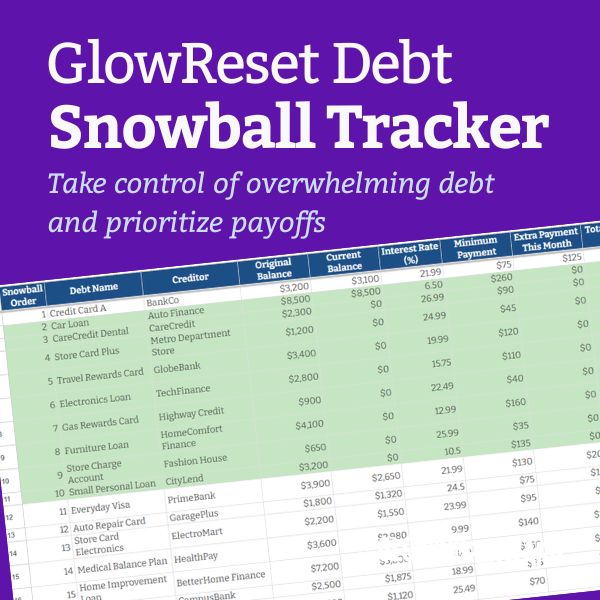
From your list, write down for each debt: balance, interest rate, and minimum payment.
Then choose one main strategy:
- High-interest first (avalanche): Focus extra payments on the highest interest rate. This saves the most money over time.
- Smallest balance first (snowball): Focus extra payments on the smallest balance. This gives faster emotional wins.
There is no wrong choice. Pick the method that you are most likely to stick with.
Next, decide on a realistic extra amount you can send each month, even if it is small. Automate it. Treat it like a bill to your future self.
If your minimum payments already feel impossible, your next step is not “try harder.” It is to explore options like 0% balance transfer offers, consolidation loans, or speaking with a nonprofit credit counseling agency. Getting help is a smart financial move, not a failure.
Step 5: Build a starter emergency fund
Even if you have debt, a small emergency fund is crucial. Without it, every surprise expense goes straight to a card.
Set a starter goal: often $500–$1,500, depending on your life and responsibilities.
Keep this in a separate savings account, ideally at a high-yield online bank. Name it something supportive, like “Calm Cushion” or “Safety Fund.”
Ways to fund it:
- Direct a small automatic transfer every payday
- Send any unexpected money (refunds, bonuses, gifts) straight to it
- Temporarily pause extra debt payments until you hit your starter goal
Once you reach that starter amount, you can shift more energy back to debt payoff while slowly growing the fund.
Step 6: Make investing boring and consistent
Investing is often where women feel most behind, especially if friends or partners started earlier.
Instead of trying to catch up overnight, focus on consistency:
- If you have a workplace plan (like a 401(k)), aim to contribute at least enough to get the full employer match. That match is part of your compensation.
- If you do not have a workplace plan, open an IRA or Roth IRA with a reputable brokerage and set up an automatic monthly contribution, even if it is small.
- Choose simple, diversified funds, like target-date retirement funds or broad index funds, if they align with your risk tolerance.
You do not need to know everything about the market to start. You just need a system that runs even on your busiest days.
Step 7: Create a weekly 20-minute money ritual
Money anxiety grows in the dark. A short, regular check-in keeps you in the driver’s seat.
Once a week, set a 20-minute timer and:
- Glance at account balances
- Confirm upcoming bills and paydays
- Move money into your safety fund or debt payoff
- Note any spending that felt especially good or especially draining
End with one supportive question: “What is one small thing I can do this week to feel a bit safer with money?” Then do just that one thing.
Step 8: Release the timeline pressure
Many high-achieving women carry a quiet script: “At my age, I should already have X saved and Y paid off.”
That story creates urgency and panic, not progress.
Instead, measure success by direction, not speed:
- Are you more aware of your numbers than you were a month ago?
- Are you moving a little more money toward safety each pay period?
- Are your financial decisions becoming more intentional, even if they are not perfect?
That is what catching up actually looks like from the inside.
You are not starting from zero. You are bringing your experience, resilience, and earning power into this next chapter. Your money can begin to reflect the woman you have already become.
Financial safety is not a personality trait you either have or do not. It is a set of skills and habits you can build, gently, one decision at a time.



